What is an ETF? A simple explanation
 Luca Caruana23 Nov 2026 · 5 min read
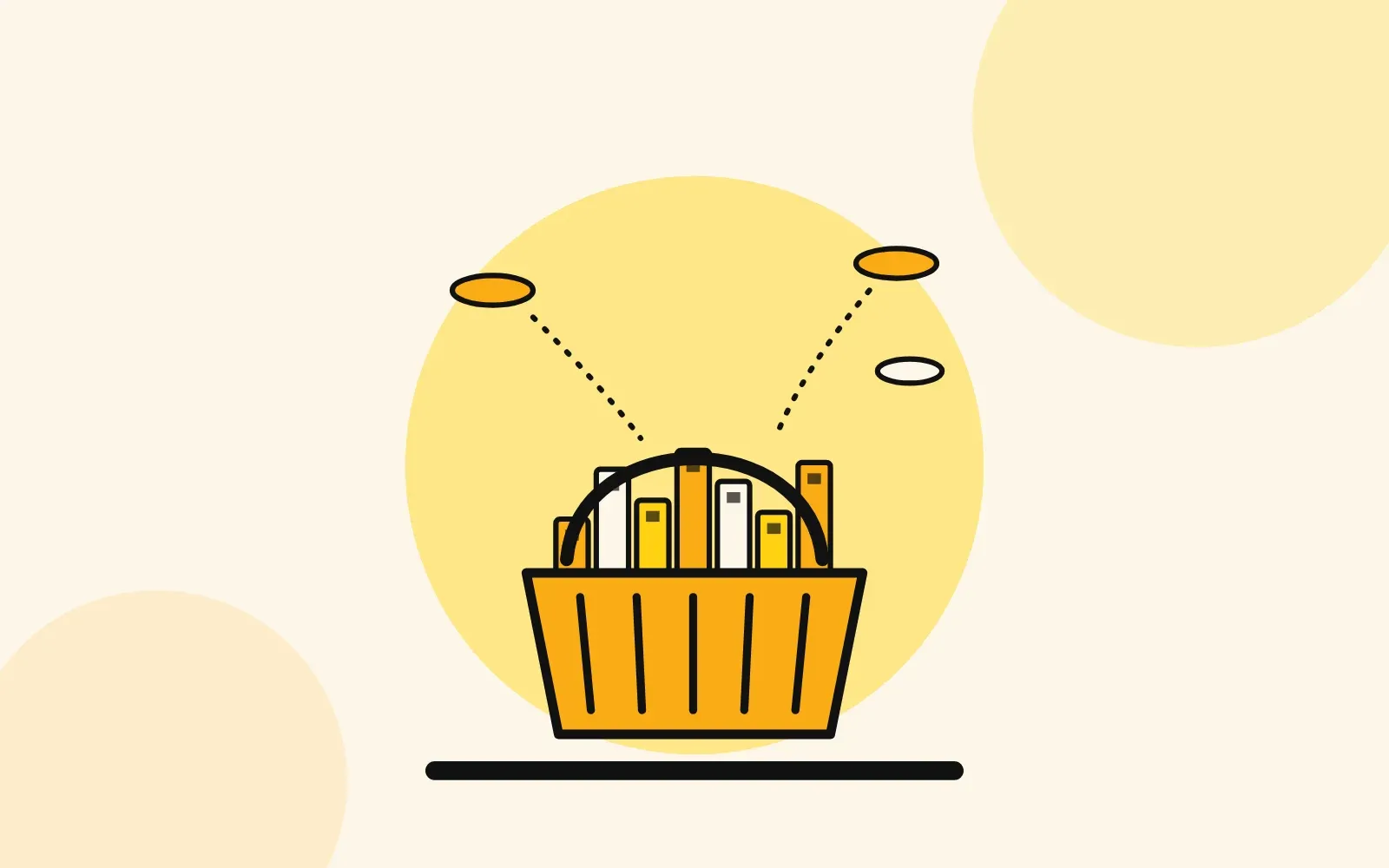
The short answer: an ETF (exchange traded fund) is a basket of many investments that you buy in one go, like a single share. Instead of picking one company, you own a small slice of tens, hundreds or even thousands of them. Most ETFs simply copy an index, which keeps their fees low.
A reader wrote to me with a question I think many people are quietly asking.
Over a few years, this reader had built up just over €150,000 in so-called "reliable ETFs", with an overall gain of about €50,000. Friends said ETFs just work. Even the reader's financial advisor said: keep investing every month and let the returns come.
And yet something didn't feel right.
"What if I've been blindly following the crowd?" the letter asked. The honest worry underneath: not really understanding what the money was invested in.
I loved that letter. Not because ETFs are bad, but because the writer wanted to know what they owned. That's exactly the right instinct. So let's answer it properly, in plain words.
Firstly, what is an ETF?
Think of a basket at the supermarket.
You could walk around and pick one apple, one loaf of bread and one carton of milk. Or you could pick up a ready-made basket that already holds a little of everything.
An ETF is the ready-made basket. It holds many shares (or bonds) at once, and you buy the whole basket in one go. The word "exchange traded" just means it's bought and sold on a stock exchange during the day, like a normal share.
So when you buy €100 of an ETF that follows a world index, you don't own €100 of one company. You own a tiny piece of thousands of them.
Why are ETFs so popular?
Three reasons.
- Diversification. If one company struggles, it's one of hundreds. Your money isn't riding on a single business.
- Low fees. Most ETFs copy an index instead of paying a manager to pick shares. Many broad index ETFs charge around 0.1% to 0.3% a year. Some actively managed funds charge 1% to 2.5% a year, plus entry fees.
- Simplicity. You can set up a monthly plan and invest the same amount every month without having to choose individual shares.
Over many years, that fee gap matters. Lower costs mean more of the return stays with you.
What is an index?
An index is simply a list of companies with a rule for who's in it.
The S&P 500, for example, holds 500 of the largest companies listed in the US. A world index holds large companies from many countries. An index ETF buys what's on the list, in roughly the same proportions, and updates when the list changes.
You'll often hear people push the S&P 500. That's mainly because of its long history: over the past century it has averaged around 8% to 10% a year. But that's an average. Some years it fell by a lot, and the past is no guarantee for the future.
Am I really diversified?
This was the part of the letter that struck me most. Looking at the portfolio, most of it was in the US, and much of it in a handful of big technology companies. That was never a conscious choice. It came as part of "buying the index".
It's right to look. Many indices give the most weight to the biggest companies. In March 2026, the 10 largest companies made up about 37% of the S&P 500.

In other words, for every €100 you put into an S&P 500 ETF, roughly €37 goes into just 10 companies. You hold 500 names, but a big part of your result depends on a few of them.
That's not necessarily wrong. But it should be a choice you make, not a surprise you discover later. A world ETF spreads you across more countries. Other ETFs hold bonds, smaller companies or particular regions. Each basket is different.
Why can't I just buy Apple instead?
You can. And yes, some single companies have done far better than the index in recent years.
But you only know the winners afterwards. Even the biggest companies in the world can fall hard. Enron was one of the largest companies in the US before it collapsed in 2001. Now imagine most of your savings sitting in one company that loses half its value in a few weeks.
An ETF won't make you rich overnight. Its job is to stop one bad decision from sinking you.
How do I check what's inside an ETF?
Every ETF has a factsheet. Before you buy, look for:
- What it holds. The index it follows, and its top 10 holdings.
- Where. How much is in each country and sector.
- What it costs. The yearly charge, often called the TER or ongoing charges.
- Whether it pays out or reinvests. "Distributing" ETFs pay dividends to you. "Accumulating" ETFs reinvest them for you.
A tip I use myself: if the factsheet feels heavy, upload it to an AI tool and ask for a plain summary. It won't replace proper advice, but it helps you understand what you're looking at.
Also, in Malta and the rest of the EU, most people buy European "UCITS" ETFs. Many US-based ETFs aren't sold to ordinary EU investors, because they don't provide the key information document EU rules require.
Frequently asked questions
Are ETFs safe?
ETFs are spread across many investments, which lowers the risk of one company hurting you. But their value still goes up and down with the markets, and you can lose money. Treat them as a long-term investment, ideally five years or more.
What is the difference between an ETF and a mutual fund?
Both are baskets of investments. Most ETFs follow an index and trade on an exchange during the day, usually with lower fees. Many mutual funds are actively managed, priced once a day, and often charge more.
Can I buy ETFs in Malta?
Yes. Through a local bank or stockbroker, or through an online investment platform. Check that the provider is regulated, what it really costs, and whether it lets you invest a set amount every month.
How are ETFs taxed in Malta?
It depends on the type of fund and where it's based. Check before you invest, or ask a tax professional. It's a short conversation that saves headaches later.
Want to understand it properly, in Maltese?
My course Investing Made Simple explains ETFs, indices and how to build a simple plan, over four live Monday evenings from 11 January, in Maltese. €175 if you book by 31 December, €195 from 1 January.
This article is for education only and is not financial or investment advice. Luca Caruana is a Certified Money Coach (CMC®). Money Coaching Hub does not sell financial products. Past performance does not guarantee future results. Based on a reader question first answered in Luca's Money Coach column in the Times of Malta.
This article is general financial education, not personal financial advice.